
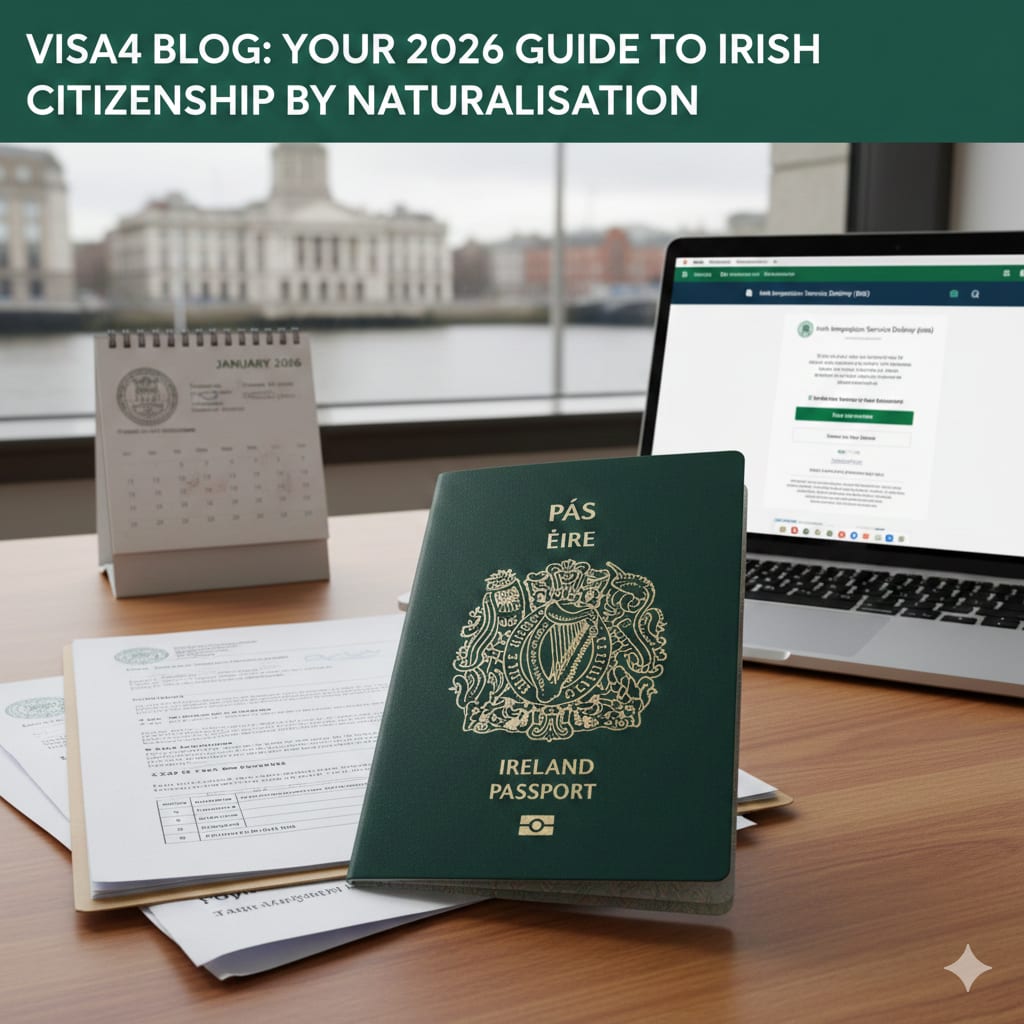
Becoming an Irish citizen is a prestigious milestone that opens doors to the European Union and the United Kingdom. However, as of January 2026, the path has become more structured and rigorous.
This blog breaks down the essential requirements, new 2026 rules, and the step-by-step process to help you secure your Irish passport.
1. Paths to Citizenship
Before you apply, you must identify which category you fall into:
Naturalisation: Based on living in Ireland for a specific number of years.
Marriage/Civil Partnership: For those married to an Irish citizen for at least 3 years.
Descent: If you have an Irish parent or grandparent (requires Foreign Birth Registration).
Associations: For those with Irish "blood or affinity" connections (this is at the Minister's discretion).
2. Naturalisation: The 2026 Rules
For most applicants, naturalisation is the standard route. To qualify, you must meet several strict criteria:
The Residency Requirement
You generally need 5 years (1,825 days) of "reckonable residence" in Ireland.
The 1-Year Continuous Rule: You must have lived in Ireland continuously for the 365 days immediately preceding your application.
Absences: In 2026, you are permitted up to 70 days of absence from the country in that final year. An additional 30 days may be allowed for exceptional circumstances (health, work, or family).
New 2026 Rule for Refugees
As of December 8, 2025, the residency requirement for individuals granted International Protection (refugees) has been increased from 3 years to 5 years, aligning it with standard adult applications.
3. The "Scorecard" System
Ireland uses a point-based scorecard to verify your identity and residence. You must reach 150 points for identity and 150 points for each year of residence you claim.
Document Type Points
Passport (Current)175 points (Identity)
P60 / Employment Summary 70 points
(Residency)Bank Statements (active)50 points (Residency)
Mortgage/Rent payments20 points (Residency)Utility Bills (Gas/Electric) 20 points (Residency)
Pro-Tip: If you cannot reach 150 points for a specific year, you must provide an affidavit explaining why, but this may delay your application.
4. Good Character & Self-Sufficiency
The Minister for Justice places a high priority on "Good Character." In 2026, the vetting process has become more integrated:
Vetting: Your criminal record, driving offenses, and even pending investigations are reviewed.
Self-Sufficiency: Recent policy updates suggest that being "self-sufficient" and not relying on certain social protection payments for the two years prior to applying is now a significant factor in the decision.
5. The Application Process & Costs
The process is now fully digital via the Immigration Service Delivery (ISD) portal.
Application Fee: Pay the non-refundable €175 fee upon submission.
Processing Time: In early 2026, the average processing time is 12–14 months.
Approval & Certification Fee: If approved, you must pay a €950 certification fee (standard adult). For minors or widows/widowers of Irish citizens, this is reduced to €200.
The Ceremony: You will be invited to a Citizenship Ceremony where you take an Oath of Fidelity to the nation. Your certificate follows by post.
6. Common Pitfalls to Avoid
Applying too early: Even being short by one day on your residency calculation will lead to an automatic rejection.
Using Non-Reckonable Stamps: Time spent on a Stamp 2 (Student Visa) does not count toward your 5-year total.
Expired Documents: Ensure your IRP card and passport are valid at the time of application.
Would you like me to help you check if your current visa stamps are "reckonable" for your citizenship timeline?